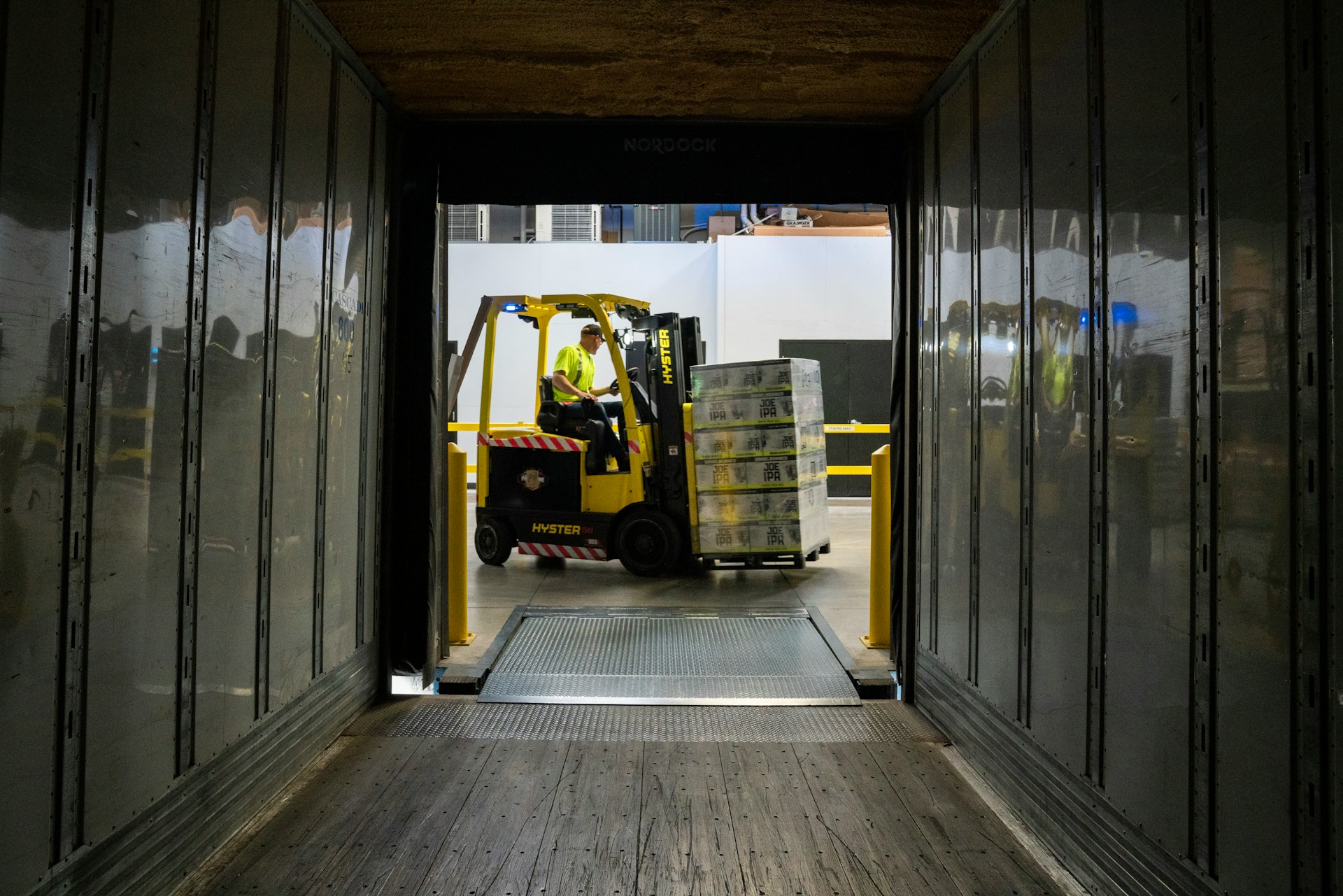
- Forklift finance spreads the cost over manageable repayments, preserving your cash flow.
- Leasing a forklift offers lower upfront costs and flexibility; financing gives long-term control and potential tax benefits.
- Lenders assess credit, cash flow, and forklift type before approving loans.
- Used forklifts can be financed, but may require more maintenance than new models.
If your business relies on moving stock, equipment, or materials, a forklift isn’t just a convenience; it’s essential. But buying one outright can be very expensive, and that’s exactly where forklift finance comes in.
This guide breaks down everything you need to know before applying, from the benefits of financing to what lenders look for and whether leasing might make sense for your business.
What is forklift finance?
Just like the name suggests, forklift finance helps you purchase forklifts for your business without paying the full cost upfront. Instead, you spread the cost over manageable repayments, which you make over an agreed period.
What are the benefits of financing a forklift?
- Retain capital to reinvest in other key areas of your business, like marketing, staff, stock, or operations
- Improve cash flow thanks to fixed, predictable repayments that make budgeting easier
- Increase productivity by bringing in extra forklifts or upgrading to higher-quality models that help you get more done (and earn bigger profits)
- Potentially qualify for tax benefits like depreciation, interest deductions, and upfront GST credits
What industries typically need forklift finance?
Any sector that relies on storage, logistics, or large-scale handling is likely to need forklift finance at some point. Common examples include:
- Warehousing and distribution
- Manufacturing
- Construction
- Retail and wholesale
- Agriculture
- Waste management
- Shipping
- Heavy equipment dealers
Should I finance or lease a forklift for my business?
When it comes to buying any new business vehicle, “finance vs lease” is a common debate. There are pros and cons to each, and the right choice for you will depend on things like your budget, how long you plan to use the asset, and how much flexibility you want. Let’s go through it:
Financing a forklift
Financing a forklift sits between buying outright and simply hiring equipment. Some loan options focus on access and flexibility, while others give you full control of the forklift from the start. Regardless, financing may be a good idea if you want to:
- Claim tax deductions, since interest payments are tax-deductible, as long as you use the forklift for work at least 50% of the time
- Save money over the long term, with repayments going towards equipment you can keep using or sell later
- Modify the vehicle and use it exactly how (and as often as) your operations require
On the flip side, financing comes with some considerations:
- Maintenance is your responsibility entirely, which means you cop wear and tear costs
- There are upfront costs, although the forklift can often double up as collateral
Leasing a forklift
When you lease a forklift, you borrow and use the asset in exchange for periodic repayments. At the end of the lease term, you typically have the option to extend the lease, return the forklift, upgrade, or buy it at its depreciated price.
Leasing might be the right choice for you if you want:
- Minimal upfront costs, since large deposits and security aren’t usually required
- Lower repayments than you’d have with a loan
- The flexibility to upgrade, return, or extend the lease at the end of the term
- Tax perks, as lease payments are typically tax-deductible when the forklift is used for business purposes
However, leasing also comes with some drawbacks:
- You don’t own the forklift until the end of the lease, which can be more expensive in the long term than buying
- Usage restrictions may apply, such as limits on working hours, weight, or attachments
- Modification options are limited, since the lessor still owns the forklift
What do lenders look at before approving forklift finance?
In a nutshell, lenders want to make sure you can comfortably make repayments and manage the asset. To assess this, they typically look at:
- Credit score: A strong credit history shows that you’ve consistently met your financial obligations, which increases your chances of approval.
- Business financials and cash flow: This includes documents like bank statements, profit & loss statements, and tax returns that give them an idea of your income consistency.
- Trading history: Many lenders prefer businesses that have been operating for at least 6-12 months.
- Forklift type and usage: Lenders may want to know how the asset will be used for business purposes, its size, and whether it is new or used.
- Existing liabilities: Lenders may consider how much debt your business already carries.
Can I finance a used forklift?
Yes, you can finance a used forklift. Doing so usually requires a lower upfront investment, plus the resale value is often stronger. At the same time, used models often need more frequent, costly repairs, and lack modern tech and safety features.
How much can I borrow for a forklift?
This will depend on factors like your lender's policy, the forklift model you’re after, your creditworthiness, revenue and cash flow, and business plan. With Valiant, though, the minimum amount for an equipment loan is $5,000.
Ready to apply for a forklift loan?
Getting the right forklift finance can make a real difference to your business, freeing up cash flow, helping you upgrade or expand your fleet, and keeping operations efficient. And with Valiant, comparing your options is easier than ever.
Our platform searches 90+ banks and alternative lenders to find the finance solutions that work for you. We handle the application process and settle funding on your behalf, so you can get your forklift in place quickly and keep your operations running smoothly. Get in touch today.
{{first-banner}}